How-to guides
How to style afro hair at home, step by step: wash day, detangling, protective styles, taking braids out, laying edges gently, making braids last and night care. The advice comes from dermatologist bodies and hair-care guides, listed at the end. We have not tested any of it, and it is general information, not medical advice.
Last updated 6 Oct 2026
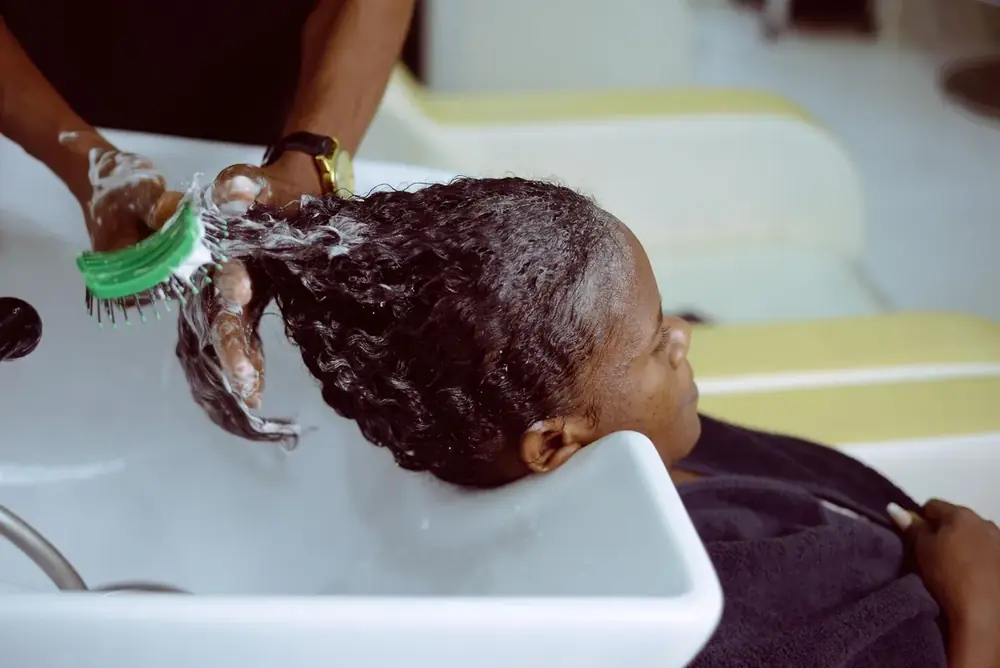
How to style afro hair, step by step
How to style afro hair at home
If you want to know how to style afro hair at home, work in this order: wash and condition, detangle, moisturise, style, then protect the style. The same order works for short afro hair. The American Academy of Dermatology says hair is nonliving and does not heal itself once it is injured, so the aim of every step below is to avoid injuring it in the first place.
- Start with a wash day, described in the next section, so that you style clean, conditioned hair.
- Detangle in sections while the hair has conditioner or leave-in on it.
- Apply leave-in conditioner or cream to damp hair and seal it with oil. The American Academy of Dermatology suggests a thick conditioner after washing, then oil or leave-in.
- Apply gel, cream or custard to define your style, if you want it, as Curl Centric suggests.
- Let your hair air-dry or use a diffuser. The American Academy of Dermatology says to limit blow drying, flat irons and curling irons, and to use the lowest heat setting if you must.
- Choose a low-tension style. Curl Centric lists two-strand twists, bantu knots, African threading and a halo braid among low-tension styles that use your own hair instead of heavy extensions.
Wash day
The American Academy of Dermatology says to wash Black hair once a week or every other week, and its curly hair guide says to wash only when needed, at least every 2 to 3 weeks. Curl Centric says many people wash once a week or every two weeks and that hands-on time is often 45 to 90 minutes, with drying time on top.
In a survey of women of African descent in London, the average gap between washes was 17.9 days, and 32.8 days when the hair was braided or in a weave. If you wear braids, Curl Centric suggests washing your scalp every 1 to 2 weeks with diluted shampoo applied to the roots.
- Pre-poo if you like: apply oil or conditioner before shampooing. This step is optional.
- Divide your hair into sections. For 4C hair, Curl Centric suggests four to eight.
- Shampoo the scalp, not the whole length of your hair, as the American Academy of Dermatology advises.
- Condition every time you wash and coat the ends. If your hair is dry or curly, apply conditioner to the entire length.
- Leave a deep conditioner on for the time on the label. Curl Centric says 5 to 30 minutes, depending on the formula.
- Detangle while the conditioner is in your hair, as in the next section.
- Rinse well. Do not rub your hair dry with a towel. Wrap it in a towel or an old t-shirt to absorb the water.
Detangling
A paper in the British Journal of Dermatology says a 2005 US study found that 96% of African-American respondents experienced breakage, and that structure and grooming stress both seem to contribute. It says mechanical damage from grooming builds up inside the hair as cracks that end in breakage at unpredictable points, and recommends continuous care of the hair.
- Detangle with product on your hair: conditioner, cream, leave-in or a detangler. Curl Centric says to use water plus conditioner or cream, not water alone.
- Part your hair into sections and clip them. Curl Centric suggests starting with left and right, then dividing further where the tangles are.
- Finger detangle first. Curl Centric says your fingers can feel knots and undo them more easily than a comb.
- Then use a wide-tooth comb, or a comb or brush designed for curly or coily hair, as the American Academy of Dermatology advises.
- Work from the tips towards the roots, one section at a time.
- Twist or braid each section when it is done, so that it does not tangle again.
- Do not brush dry hair, as the American Academy of Dermatology warns.
Protective styles
Curl Centric describes protective styles as styles that tuck your ends away and reduce daily handling, including braids, twists, buns, weaves and wigs. Its rough guide to how long to keep them in is 6 to 8 weeks for box braids, 4 to 6 for twists with extensions, 2 to 4 for cornrows and 3 to 7 days for bantu knots. The American Academy of Dermatology says to wear weaves and extensions for two or three months at most and then give your hair a break.
The risk is tension. Traction alopecia is hair loss from constant pulling. A 2018 review in a dermatology journal reports that it affects one third of women of African descent who wear traumatic hairstyles for a prolonged period, and that the risk rises with how hard the hair is pulled and for how long. The British Association of Dermatologists says the first step is to stop tight hairstyles, that regrowth may start about 3 months later, and that long-standing damage can be permanent. DermNet says the loss does not scar at first, but prolonged, excessive tension destroys hair follicles and the loss becomes permanent. See a doctor if hair loss persists. Our style pages for Fulani and tribal braids, lemonade braids, twist braids and short braids give packs, time and cost.
- Prepare first: shampoo, condition the ends and moisturise before the install, as Curl Centric suggests.
- Choose larger sections and a shorter length. Curl Centric says small braids and twists put the extension weight on less hair, and that a shorter length cuts the weight your roots carry.
- If it hurts while your hair is being styled, ask the stylist to stop. The American Academy of Dermatology says a style that hurts is too tight.
- Watch for warning signs: pain, stinging, crusts on the scalp, broken hairs around the forehead or a receding hairline.
- Treat eight weeks as the maximum, not the goal, and rest your hair for 1 to 2 weeks between styles, as Curl Centric advises.
How to take out braids without breakage
Take your time. Curl Centric says a Senegalese twist take-down takes 2 to 4 hours and a Marley twist take-down 1 to 3, and suggests splitting the job across two sessions if you need to. Shed hair collects inside the style, so it can look worse than it is. The American Academy of Dermatology says it is normal to shed between 50 and 100 hairs a day. If you go to a salon, the middle half of the 75 SA listings for removing braids that we read on Fresha is R150 to R280, with a median of R180, and takes about an hour.
- Soak the style in conditioner.
- Cut the extension hair off first, as Curl Centric suggests.
- Unravel the braids from the ends upward.
- Separate the shed hair as you work.
- Detangle gently in sections once the braids are out, as in the detangling section above.
- Wash with a clarifying shampoo and follow with a deep conditioner. Hermosa Hair advises giving your hair a break before the next style.
- If you find bumps along the braid lines, loosen or remove the style. Curl Centric says they can take up to a month to clear, and to see a doctor if a home remedy has not worked within a couple of weeks or you have a spreading rash, a fever or a foul smell.
How to lay edges gently
The American Academy of Dermatology calls your edges, the wispy baby hairs around your hairline, very fragile. Curl Centric says laying your edges is not necessarily bad for your hair, but it can be if you do it too often or with harsh products.
- Do it now and then, not every day.
- Use a small amount of a water-based gel. The American Academy of Dermatology says to use only water-based styling gels on your edges.
- Avoid edge control with harsh ingredients such as alcohol or petroleum, and look for natural ingredients such as aloe vera or shea butter, as Curl Centric suggests.
- Smooth the hair into place without pulling it tight, and do not slick it into tight styles.
- Avoid heated tools on your edges when you can.
- Moisturise your edges and protect them at night with satin, which Curl Centric lists as part of looking after them.
How to make braids last
Guides disagree on how long braids last. Ywigs says lemonade braids typically last 4 to 8 weeks with proper care, and that small and medium braids hold longer than jumbo ones. Curl Centric advises larger sections for less tension. Ask your braider to balance the two.
- Wash your hair and condition the ends before the appointment.
- Wash your scalp every 1 to 2 weeks with diluted shampoo applied directly to the roots, and rinse well.
- Go easy on product. Curl Centric says to watch for buildup and white flakes.
- Tie your hair down or wear a bonnet at night.
- Redo the twists or braids at your hairline between wash days, because Curl Centric says they loosen first.
- Take the style out on time. Ywigs suggests around 6 to 8 weeks, and Curl Centric suggests taking Senegalese twists out at about 6.
Night care: satin bonnet or pillowcase
Curl Centric says both satin and silk help to reduce frizz and breakage while keeping moisture in. It says silk does not snag your hair, that satin can snag as it gets more use, and that the choice comes down to preference and budget. A bonnet suits naturally curly hair, and a pillowcase suits a restless sleeper, because bonnets slip off. We have not tested either.
Check the label. Curl Centric warns that some sellers use names such as satin or silk, or sateen, for fabrics that are not silk. The American Academy of Dermatology also suggests pulling curly hair into a loose ponytail on top of your head, or a loose braid, before you sleep, to preserve the curls. Curl Centric says to cover braids at night with a satin or silk scarf or bonnet.
- Bend forward and let your hair hang down.
- Put one side of the bonnet at the base of your neck and stretch it over your hair, using the back of your head as an anchor.
- Fold any hanging ends up in an accordion pattern, then stand up and pull the bonnet on.
- Tuck all your hair inside and adjust the band to sit just above your hairline.
- If it slips, check the size, secure it with bobby pins, or switch to a satin or silk pillowcase.